Pakistan Cardiometabolic Health Network
Building a National Cardiovascular-Kidney-Metabolic (CKM) Health Ecosystem
Prevention | Care | Research | Innovation | Policy
Connecting people, data, technology and healthcare systems to improve the cardiometabolic health of Pakistan.
Sep
26–27
2026
Upcoming flagship event
7th National CRM Conference
Cardiovascular • Renal • Metabolic
Cardiovascular
Renal
Metabolic
Collaborate. Innovate. Advance.
WHY IT MATTERS
Why Cardiometabolic Health Matters
Cardiometabolic health refers to the interconnected health of the heart, blood vessels, kidneys, metabolism, liver, and brain. Conditions such as obesity, diabetes, hypertension, dyslipidemia, chronic kidney disease (CKD), fatty liver disease, stroke, and cardiovascular disease share common risk factors and frequently occur together.
route
Disease progression
The Disease Pathway
- Obesity
- Insulin Resistance
- Diabetes
- Kidney Disease
- Atherosclerosis
- Heart Attack / Stroke
These conditions are not isolated diseases; they are manifestations of the same underlying cardiometabolic process.
The Challenge
A global epidemic with Pakistan at the epicentre of the cardiometabolic health crisis.
A Global Epidemic
- Cardiovascular disease remains the leading cause of death worldwide, responsible for approximately 20 million deaths annually.
- More than 589 million adults worldwide are living with diabetes, and the number continues to rise.
- Most premature cardiometabolic deaths occur in low- and middle-income countries.
Pakistan: An Unprecedented CKM Crisis
- 1 in 3 adults has diabetes or prediabetes.
- Rising obesity epidemic and increasing hypertension prevalence.
- Growing burden of chronic kidney disease (CKD).
- Cardiovascular disease remains the leading cause of death.
- Significant economic and social consequences — these diseases do not occur in isolation.
The Cardiometabolic Disease Continuum
A progression that can be prevented — early action can change the course.
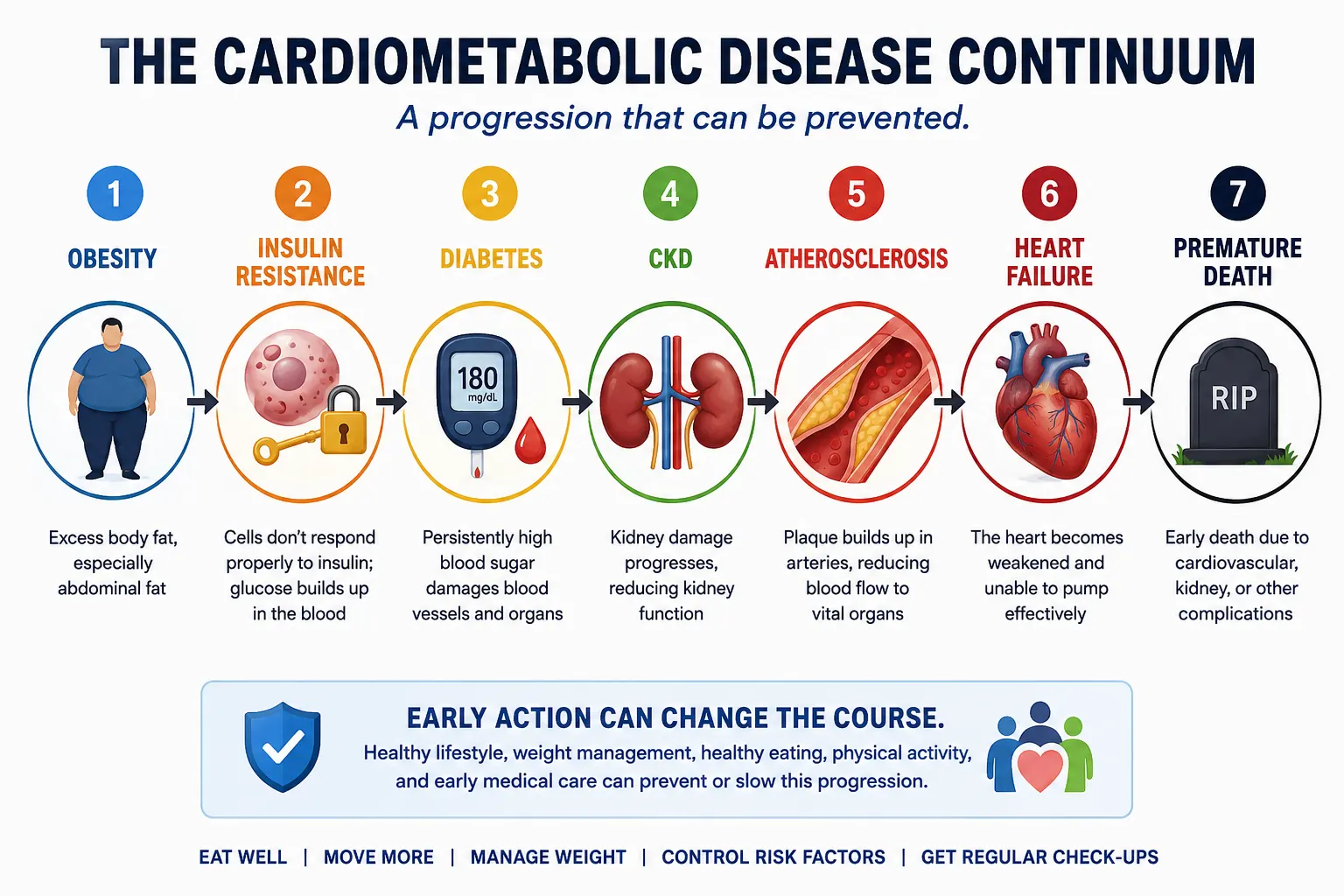
Healthy lifestyle, weight management, healthy eating, physical activity, and early medical care can prevent or slow this progression.
Why a Cardiometabolic Approach?
Traditionally, patients are treated separately by cardiologists, endocrinologists, nephrologists, neurologists, and hepatologists. A unified cardiometabolic approach changes that.
Our Strategic Pillars
Five interconnected pillars driving systemic change in cardiometabolic health.
science
Research
Registries, trials, and AI-driven digital health applications.
health_and_safety
Prevention
Risk assessment, screening, and community wellness programmes.
school
Education
Professional training, patient education, and CME programmes.
biotech
Innovation
Telemedicine, remote monitoring, and predictive analytics.
policy
Policy
Guidelines, advocacy, and health system strengthening.
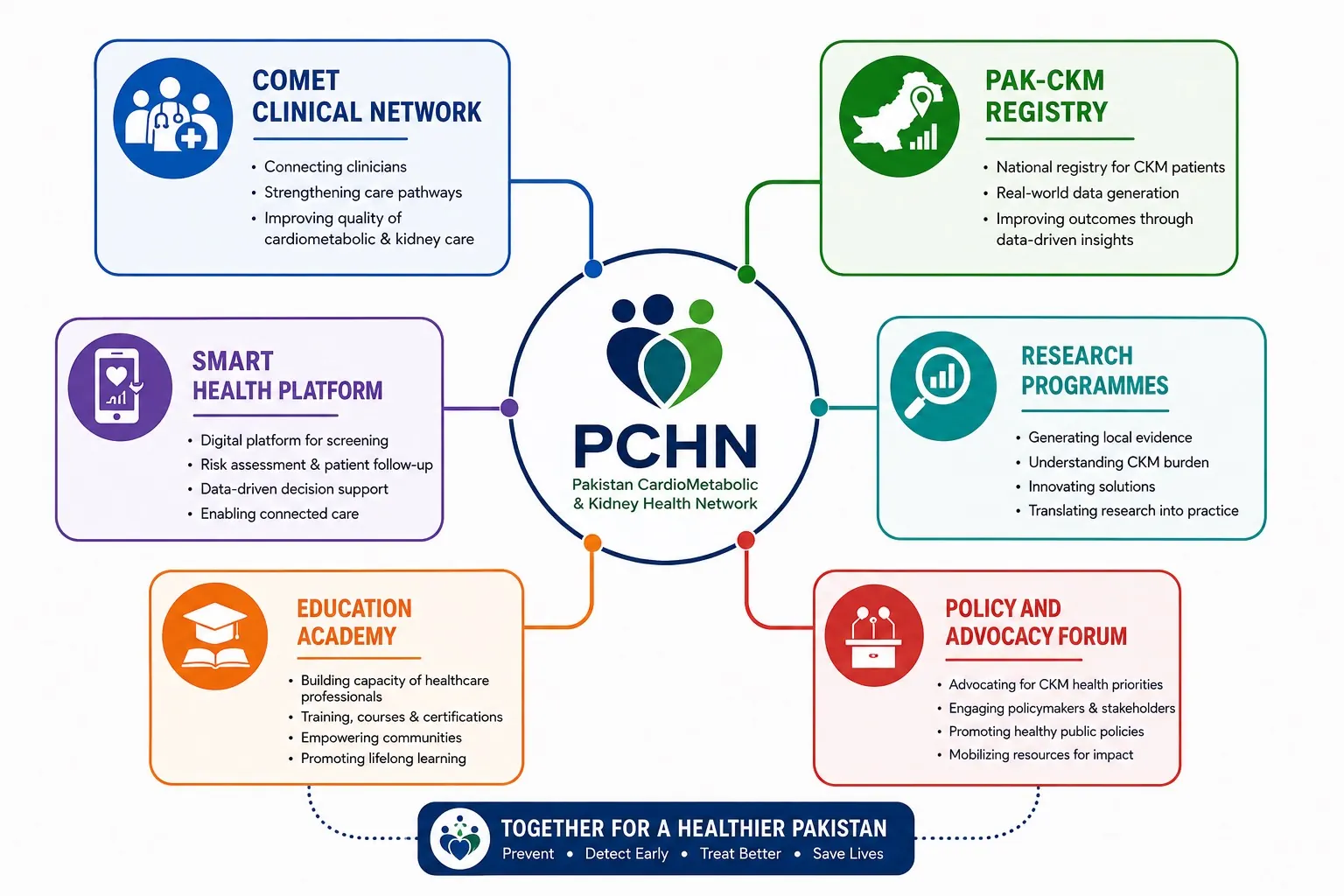
The PCHN Ecosystem
Six interconnected initiatives working together for a healthier Pakistan.
Work Achieved to Date
A strong foundation for national expansion.
6
National Conferences
Cardiometabolic conferences held nationwide
2,000+
Patients Managed
Through COMET clinics and outreach
Research & Outreach
Publications, community programmes, and digital education
PCHN Flagship Programmes
Integrated initiatives transforming cardiometabolic care across Pakistan.
FLAGSHIP
COMET Clinical Network
Cardiometabolic Evaluation & Treatment — integrated clinics for obesity, diabetes, hypertension, CKD, fatty liver disease, and ASCVD prevention.
Learn more arrow_forward databasePAK-CRM Registry
Pakistan's first national CRM registry — targeting 100,000 participants for epidemiology, risk prediction, and outcomes research.
Learn more arrow_forward devicesSMART Health Platform
A digital ecosystem for patient engagement, remote monitoring, risk scoring, and clinical decision support.
Learn more arrow_forward schoolEducation Academy
Training programmes for physicians, nurses, allied health professionals, students, and community health workers.
Learn more arrow_forward